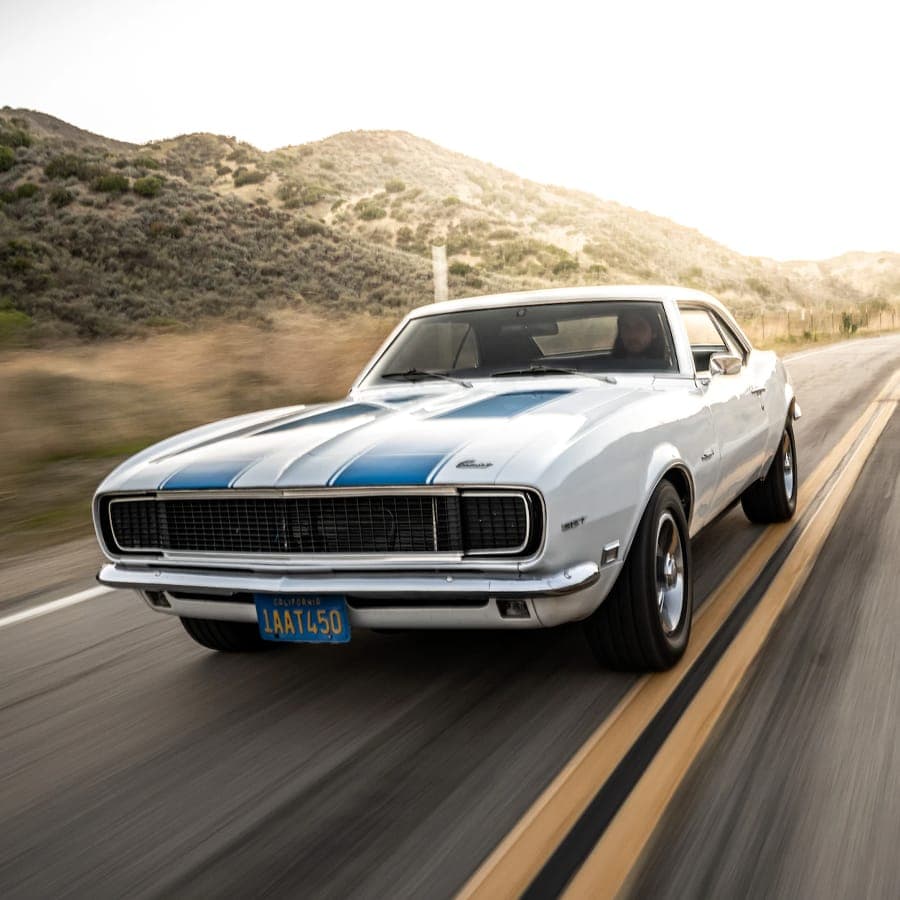
You paid cash, or paid the loan off. That doesn't mean the money is stuck. A cash-out refinance lets you borrow against the equity in a car you already own and put that capital back to work, without selling the car.
One of the quietest advantages of owning a valuable car outright is that it can act like a reserve of capital. If you own an exotic, classic, or collector vehicle free and clear, or nearly so, a cash-out refinance lets you borrow against its value and free up cash without selling the car you worked to get. Here is how cash-out refinancing works on specialty vehicles in 2026, what it takes to qualify, and how to decide whether it is the right move.
What is a cash-out refinance on a car?
A cash-out refinance replaces your current situation, either an existing loan or clear ownership, with a new loan for more than you owe, and pays you the difference in cash. If you own the car outright, the entire loan (up to the lender's limit against the car's value) comes back to you as liquidity. If you still carry a loan, the new loan pays off the old balance and returns the surplus. Either way, you keep driving the car. You are simply converting some of the equity locked in the vehicle into usable cash.
How much can you borrow against your car?
Specialty cash-out and refinance loans are structured around the car's real value, established by a certified appraisal rather than a generic price guide. As a general guide:
- Up to about 70% of the vehicle's appraised value is typically available as cash-out, depending on the car and your profile.
- Loan amounts from around $10,000 up to $5,000,000, so both attainable collectibles and seven-figure exotics are in range.
- Simple-interest loans with terms up to 180 months, so payments stay manageable and paying down early reduces what you owe.
- Any era or type: exotic, classic, collector, and high-line luxury, valued on the individual car's merits.
Cash-out vs. rate-and-term refinance
"Refinance" covers two different goals, and it helps to know which one you actually want:
Rate-and-term refinance
You already have a loan and want a better one, a lower rate, a different term, or a lower monthly payment. No cash changes hands beyond paying off the old loan. This is about improving the terms of debt you already carry.
Cash-out refinance
You want liquidity. You borrow against the equity in a car you own (or mostly own) and walk away with cash for another purpose. The car secures the loan, but the money is yours to deploy.
When cash-out refinancing makes sense
- Bridge to the next car. Free up capital to move on a rare, correct example the moment it appears, without a fire sale of something you already own.
- Business or investment capital. Access cash for an opportunity that can work harder than the loan costs, while keeping the car in your collection.
- Consolidate a higher-rate balance. Replace more expensive debt with a simple-interest loan secured by an appreciating or stable asset.
- A planned liquidity event. Cover a tax bill, a renovation, or a large expense on your timeline rather than a lender's.
- Keep the car, unlock the value. The core appeal: you get liquidity and you keep driving and enjoying the vehicle.
See how your car's equity lines up
Check My Fit gives you a directional read on cash-out and refinance options in a couple of minutes. No application, no credit pull.
Try Check My FitWhat you'll need to qualify
Cash-out requests are underwritten a little more conservatively than a straight purchase, because the lender is advancing cash against an asset rather than financing a sale. Expect to provide:
- A credit profile of roughly 680 or higher. Cash-out and refinance generally sit a step above the ~650 recommended for purchases.
- A certified appraisal. This establishes the car's value and, in turn, how much cash-out is available. See our guide to appraisals and pre-purchase inspections.
- Proof of ownership and clear title, or the details of the loan being paid off.
- Documentable income that matches how you actually earn, which matters especially for self-employed owners.
How the process works
- Get a directional read with Check My Fit so you know roughly where you stand before anything is pulled.
- Start a secure application and share the car and ownership details.
- Complete the appraisal so the car's value, and your available cash-out, is confirmed.
- Review the structure with a specialist, then close, with title and paperwork typically handled for you.
The cautions worth respecting
Borrowing against a car is a real financial commitment, not free money. A few guardrails keep it smart:
- Don't over-leverage a moving target. Values shift. Borrow at a level that still makes sense if the market softens.
- Protect the collateral. Keep the car on an agreed-value specialty policy so a covered loss pays the value you and the insurer set, not a depreciated figure.
- Have a use for the capital. Cash-out earns its keep when the money does something productive; it is not a reason to spend for its own sake.
- Mind the total cost. Simple interest with no prepayment penalty means you can pay the balance down aggressively once the capital has done its job.
Used deliberately, a cash-out refinance turns a car sitting in your garage into flexible capital while you keep the keys. If you are weighing whether to tie up cash in the first place, our guide to financing or paying cash for a collector car works through the same trade-off from the other direction.
Frequently asked questions
Can I get cash out of a car I already own outright?
Yes. If you own the car free and clear, a cash-out refinance lets you borrow against its appraised value, typically up to about 70%, and receive that amount as cash while keeping the car.
How much can I borrow against my exotic or collector car?
Generally up to about 70% of the vehicle's certified appraised value, within overall loan amounts from around $10,000 up to $5,000,000, depending on the car and your profile.
What credit score do I need for a cash-out refinance?
Cash-out and refinance requests typically call for a score of about 680 or higher, a step above the roughly 650 recommended for a straight purchase. A real person reviews the whole file, not just the number.
Do I need an appraisal to refinance my car?
For cash-out, yes. A certified appraisal establishes the car's value, which determines how much cash-out is available. A rate-and-term refinance may have different requirements.
Is the interest simple interest?
Yes. These are simple-interest loans, so interest accrues on your outstanding balance and paying early or paying extra reduces what you owe, usually with no prepayment penalty.
Can I keep driving the car during and after the refinance?
Yes. A cash-out refinance is secured by the car but you keep and drive it. You are converting equity into cash, not selling the vehicle.